Every week, people from across the world contact SOZO Brain Center with questions that matter deeply — not just medically, but personally. Will my father walk again? How long do the results from neuromodulation treatment last? Is non-invasive brain stimulation actually safe? Do I have to fly to Cyprus?
We hear every one of these questions. And we understand that when you or someone you love is living with Multiple Sclerosis, Parkinson’s Disease, ALS, Dementia, Cerebral Palsy, and so many other life-changing conditions, there is no such thing as a minor question.
This post brings together the most frequently asked questions from international patients and their families — from our website, our social media, and directly from patients coming to our clinics. We answer each one as directly and honestly as we can. Because at SOZO Brain Center, we believe that healthcare is about responsibility — and part of that responsibility is making sure you have the information you deserve.
About Neuromodulation Treatment
What is neuromodulation, and how is it different from surgery?
Neuromodulation is the process of changing or modulating nerve activity in the body to normalize nervous tissue functions. This is achieved by sending a stimulus to a specific area in your body either through pharmaceutical drugs or brain stimulation. At SOZO Brain Center, we use several non-invasive neuromodulation technologies, individually selected and often combined based on each patient’s clinical profile:
- tDCS (Transcranial Direct Current Stimulation) — applying electrodes on the scalp to stimulate the brain areas which don’t function as they should.
- TPS (Transcranial Pulse Stimulation) — a non-invasive therapy that uses low-energy shock waves to stimulate deep regions of the brain
- taVNS (Transcutaneous Auricular Vagus Nerve Stimulation) — a non-invasive neuromodulation technique that delivers gentle electrical impulses to the auricular branch of the vagus nerve
- CES (Cranial Electrotherapy Stimulation) — a non-invasive neuromodulation technique that delivers low-level electrical currents via electrodes placed on the earlobes
- MET (Microcurrent Electrical Therapy) — a non-invasive technique that uses extremely low-level electrical currents, in the microampere range, to support the body’s healing processes.
No surgery. No implants. No general anesthesia. Just careful stimulation, delivered by a trained multidisciplinary medical team.
Is non-invasive brain stimulation backed by science?
Yes. A substantial and growing body of peer-reviewed clinical research supports the use of non-invasive neuromodulation across a wide range of neurological, psychiatric, and chronic conditions. Randomized controlled trials — including sham-controlled studies that rule out placebo effects — consistently demonstrate meaningful clinical benefits. SOZO Brain Center adheres to evidence-based protocols grounded in published medical literature. In March 2026, our own team published a peer-reviewed case report in Frontiers in Neurology exploring Transcranial Pulse Stimulation for treatment-resistant Restless Legs Syndrome — one of several contributions to the scientific literature from our team. You can explore the research supporting our approach at sozobraincenter.com/scientific-research.
Is neuromodulation safe? What side effects should I expect?
Non-invasive neuromodulation has a well-established safety profile across decades of clinical research. The most commonly reported effects are mild and temporary:
- A slight tingling or warmth at the electrode site during stimulation
- Mild fatigue or a light headache following a session
- Brief, minor skin redness where pads contact the skin
Serious adverse events are extremely rare when treatment is delivered by trained professionals using appropriate devices and protocols. At SOZO, every patient is monitored throughout each session, and parameters are adjusted based on individual response. If you have existing medical conditions, implanted devices, or epilepsy, these are assessed during your clinical evaluation before any treatment begins.
Results, Expectations and What Is Possible
Does neuromodulation treatment last? Will the improvements be permanent?
This is one of the most important questions we receive — and it deserves a careful, honest answer.
For many patients, the improvements from neuromodulation are consistent and continue to develop beyond the in-clinic phase. This is because the goal of treatment is not to create a brief stimulatory effect and stop. The goal is to help the brain establish new, healthier patterns of neural activity — and when those patterns take hold, the changes can be lasting.
That being said, neuromodulation is not a one-time event. It is a process. At SOZO, your treatment does not end when you leave the clinic. After completing your in-clinic sessions, you continue with a personalized home treatment plan using your prescribed neuromodulation device. This home phase is critical to consolidating and extending the improvements initiated in-clinic.
Patients return for a follow-up visit to assess progress and refine their treatment plan. Our aim is always long-term, sustained improvement — not a short-lived boost.
Will I walk again? Can neuromodulation restore lost neurological function?
This question comes from patients living with Multiple Sclerosis, ALS, Spinal Cord Injury, Parkinson’s Disease, Post-Stroke Encephalopathy, and Multiple System Atrophy — and we want to answer it with both honesty and genuine hope.
Neuromodulation does not reverse the underlying pathology of progressive neurological diseases. But it can, and in many documented cases does, produce meaningful functional improvement — including in mobility, gait, balance, and motor coordination.
Every patient’s starting point, disease stage, and neurology is different. What we can promise is a thorough individual assessment, a personalized treatment plan, and a medical team fully committed to your best possible outcome.
How quickly will I see results after starting treatment?
Results vary widely. Some patients notice changes within days of beginning their first in-clinic sessions. For others, improvement is more gradual — developing and deepening over weeks or months. In complex neurological conditions, it is entirely normal for results to progress more slowly and this does not mean treatment is not working. The follow-up neurophysiological assessment we conduct after your home treatment phase gives both you and our team an objective measure of what has changed.
What if I have a progressive condition — is treatment still worthwhile?
Yes. For patients with progressive conditions such as ALS, Parkinson’s Disease, Multiple Sclerosis, Dementia, or Alzheimer’s Disease, the aim of neuromodulation is not necessarily to achieve a cure. The goals are to preserve quality of life, slow functional decline, reduce the severity of symptoms, and support as much independence as possible at each stage of the condition.
Many of our international patients come to us after being told by specialists in their home countries that nothing further can be done. We approach every case from the standpoint of what can still be achieved: Stabilizing a condition that was deteriorating. Reducing fatigue or pain. Improving speech or swallowing. Regaining moments of independence. These are meaningful outcomes — and they are what we work toward.
Conditions Treated and Eligibility
What neurological conditions does SOZO Brain Center treat?
SOZO Brain Center treats a broad spectrum of neurological, chronic, and mental health conditions. This includes, but is not limited to:
• Multiple Sclerosis (MS)
• Parkinson’s disease
• ALS (Amyotrophic Lateral Sclerosis)
• Alzheimer’s disease and dementia
• Spinal Cord Injury (SCI)
• Post-Stroke Encephalopathy
• Multiple System Atrophy (MSA)
• Autism Spectrum Disorder
• Cerebral Palsy
• ADHD and learning disabilities
• Depression, anxiety, PTSD, bipolar disorder
• Epilepsy
• Tinnitus
• Fibromyalgia and chronic pain
• Mild Cognitive Impairment (MCI)
• ME/CFS (Myalgic Encephalomyelitis / Chronic Fatigue Syndrome)
If you are unsure whether your condition may benefit from neuromodulation treatment, the right first step is to fill out the Book Your Consultation form at sozobraincenter.com/book-your-consultation. Our international patient management team will review your case and give you an honest assessment.
How do I know if I am a suitable candidate?
Suitability for neuromodulation treatment is determined individually. When you submit a consultation request, our team will ask for your medical history and relevant clinical documentation to conduct a preliminary review.
On your first day at SOZO Brain Center as an international patient, a comprehensive clinical assessment takes place — including psychological examinations, blood tests, brain MRI, brain mapping, and neurophysiological tests specific to your condition. Your personalized treatment plan is built entirely based on this assessment. Nothing is assumed in advance.
Can children receive neuromodulation treatment at SOZO?
Yes. SOZO Brain Center treats children as well as adults. Conditions including Cerebral Palsy, Autism Spectrum Disorder, ADHD, Epilepsy, and learning disabilities are among those showing clinical benefit from non-invasive neuromodulation in younger patients. Treatment protocols for children are always carefully tailored to their age, neurological status, and clinical needs.
Travel, Logistics and the International Patients Initiative
Do I have to travel to Cyprus to receive treatment?
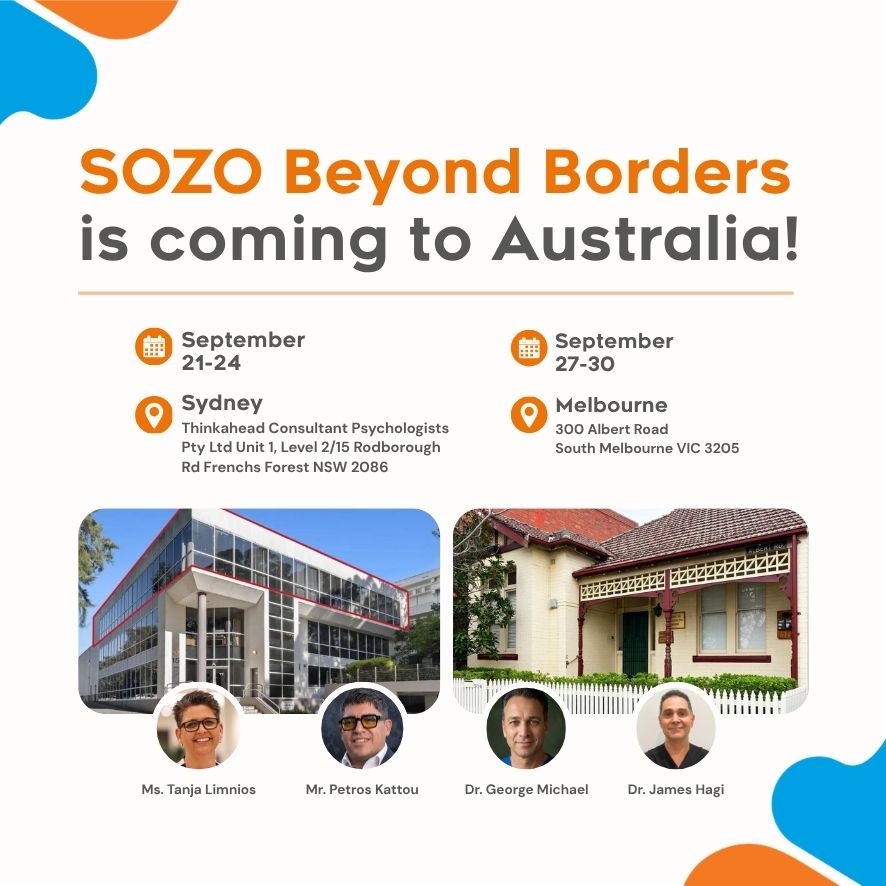
While SOZO Brain Center’s clinics in Limassol and Nicosia, Cyprus, remain open and welcoming to international patients, the launch of our International Patients Initiative means that treatment is now accessible even when world events resulted in travel disruptions for international patients unable to travel to us. Led by Chief Neuromodulation Officer Petros Kattou, our multidisciplinary medical team now travels to carefully selected partner clinics around the world.
Will I receive the same quality of care at the partner clinics as in Cyprus?
Yes, without exception. The International Patients Initiative is not a reduced version of SOZO care — it is SOZO care, in a different location. Patients treated at partner clinics receive the same clinical protocols, devices, and neuromodulation approaches. For the International Patient Initiative, Petros Kattou and the SOZO multidisciplinary team will personally travel to each partner location.
How long will I need to stay at the clinic?
Most international patients complete their in-clinic treatment over one week. Your exact schedule depends on your condition and clinical profile — the international patient management team will provide full details before your visit so you can plan travel and accommodation with confidence.
My family member has very limited mobility. Can they still attend?
Yes. Many of our patients arrive with significant mobility limitations — some in wheelchairs, some with severe motor difficulties. Our team is experienced working across the full spectrum of neurological disability, and clinical facilities are selected with accessibility in mind.
Patients and their family member or caregivers will be trained in the use of the home neuromodulation device, making your continued care after returning home safer and more effective.
The Treatment Process, Step by Step
What happens on my first day at SOZO?
Your first day is dedicated entirely to clinical assessment. Before any neuromodulation treatment begins, our multidisciplinary team conducts a comprehensive evaluation including psychological examinations, blood tests, brain MRI, brain mapping, and neurophysiological tests specific to your condition. The results are compiled into a detailed primary report that forms the basis of your personalized treatment plan.
What does a typical treatment session look like?
Sessions involve the application of one or more non-invasive neuromodulation devices, selected according to your individual protocol. Electrodes or stimulation pads are placed on specific areas of the scalp or body. Most patients find sessions comfortable. Our specialists monitor each session closely and adjust parameters as needed.
Throughout the treatment week, you will also be trained on your home neuromodulation device so you can continue independently when you return home. Family members are encouraged to participate in this training.
What happens to my treatment after I leave the clinic?
Your treatment does not stop when you leave. After your in-clinic sessions, you will leave with your personalized home neuromodulation device and a detailed home treatment plan. This phase is essential to consolidating the neurological changes initiated in-clinic.
A follow-up assessment is then scheduled, during which our team repeats the neurophysiological tests from your initial evaluation — giving an objective measurement of your progress. Your plan is updated if needed. This is an ongoing relationship, not a one-time visit.
Practical and Financial Questions
How do I start the process as an international patient?
The first step is simple: fill out the Book Your Consultation form at sozobraincenter.com/book-your-consultation. Our International Patient Management team will contact you to gather your medical history, answer your questions, and guide you through next steps. There is no commitment required at this stage.
Can I continue working with my existing neurologist or GP?
We always encourage patients to maintain their relationship with their existing medical team. Neuromodulation at SOZO is designed to complement, not replace, ongoing medical care. After your assessment and treatment, you will receive a detailed clinical report to share with your local specialists, ensuring continuity of care when you return home.
How much does treatment at SOZO Brain Center cost?
Treatment costs at SOZO Brain Center vary depending on the patient’s condition, and the type and duration of sessions, as every treatment plan is tailored to the patient’s individual needs. Your plan may include a combination of assessments, in-clinic sessions, and neuromodulation devices, so pricing differs from person to person.
The process begins with a comprehensive evaluation, which determines the full scope and cost of your personalized treatment plan. For international patients planning to travel to our clinics, reach out to our patient management team through the Book Consultation form to learn what your treatment journey would look like.
Other Questions
How is SOZO different from other clinics offering brain stimulation?
Several things distinguish SOZO. First, we never use a single device or a universal protocol. Each patient receives a personalized combination of neuromodulation technologies, calibrated to their specific neurological condition based on a comprehensive clinical assessment.
Second, the treatment model extends well beyond the clinic. In-clinic sessions set the foundation; the home treatment phase — continued with your personal device and plan — is where long-term improvement is built. Third, SOZO is both a leading clinical centre and an international training institution: the expertise we teach to doctors worldwide is the same expertise your treatment is built upon.
Can I use neuromodulation alongside my current medications?
In most cases, yes. Neuromodulation is designed to complement existing medications and therapies, not conflict with them. Your current medication regime is reviewed as part of your clinical assessment, and our team ensures your personalized plan is appropriate given your full medical picture. Please bring a complete medication list to your consultation, or include it in your pre-visit documentation.
Do I need to keep travelling back to Cyprus indefinitely?
No. The home treatment model at SOZO is specifically designed to be sustainable without repeated international travel. Your initial visit — whether to Cyprus or a partner clinic — establishes your personalized plan and trains you on your device to continue treatment at home.
Still Have Questions? We Want to Hear From You.
The questions in this article are the ones we hear most often — but your situation is unique and your questions may be too. Our international patient management team is here to answer honestly, promptly, and with genuine care.
Start the conversation by filling out the Book Your Consultation form at sozobraincenter.com/book-your-consultation.
Every person living with a neurological, mental, or chronic condition deserves access to the most advanced and compassionate care available. That belief is what drives everything we do — across every clinic, every country, and every patient journey.
Because healthcare is not about location. Healthcare is about responsibility.